

The Tyranny of Shoulds: Why You Can't Let Go Even When No One's Watching
You're not indulging if it doesn't feel feral and unhinged.

Enrollment for the Movement & Mindset Membership is now open! Use the mind to unlock your movement. Use movement to expand the mind. Sign up now
The first bite of a cookie is always the best.
But on the second bite, as the chocolate melts into your mouth, there’s something tugging on your enjoyment. You think back on what you ate that day, how much you worked out, and try to justify finishing the cookie. The more full and satisfied you become from velvety chocolate and chewy cookie dough, the more the guilt starts to creep in.
For anyone past the age of 25, eating a cookie always feels like there are consequences attached. You finish your little indulgent desert and the regret compounds. You can’t help but feel like you didn’t fully enjoy that cookie.
Something similar happens in dance.
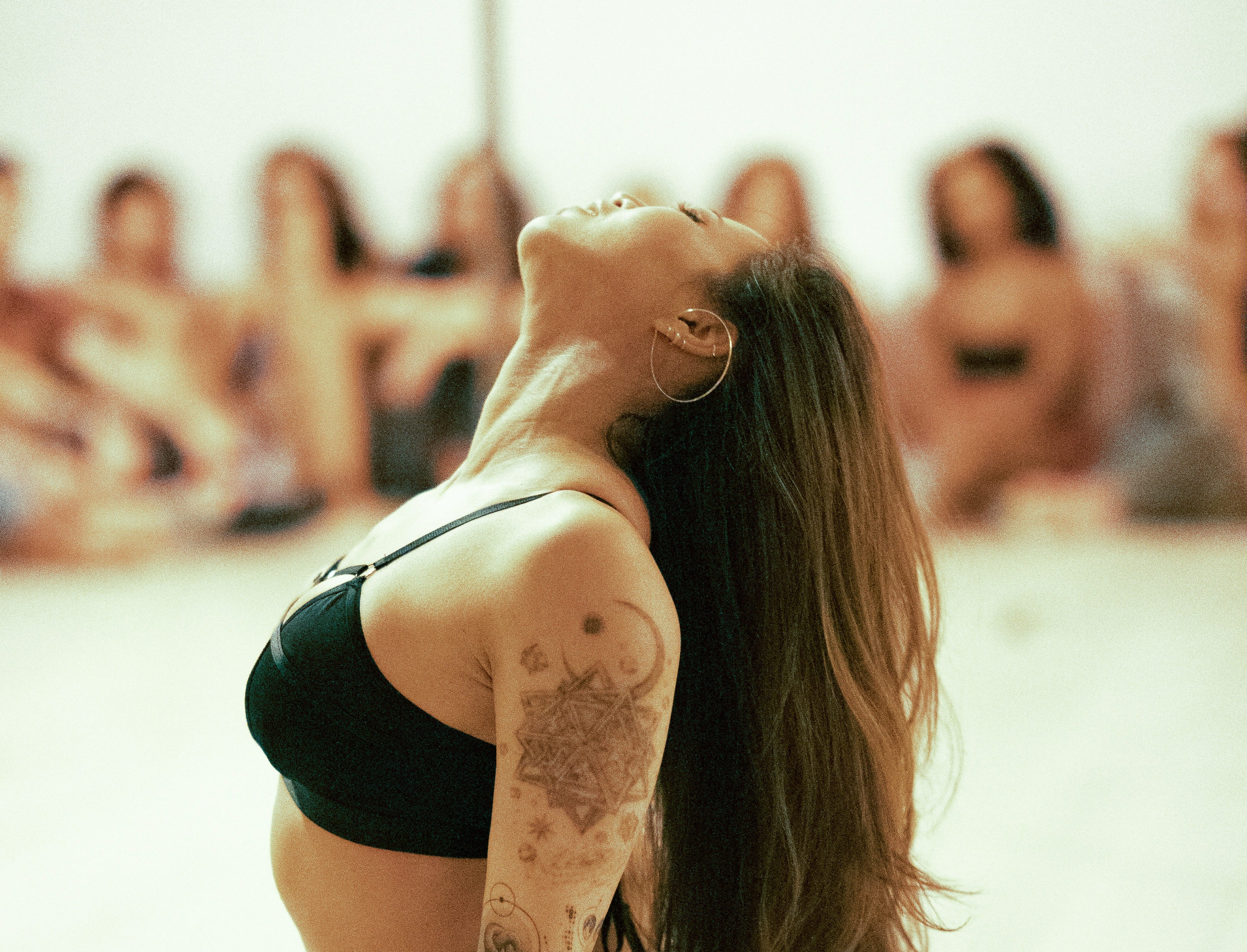
Indulgence is often used interchangeably with words like savor and luxuriate to describe juicy, slow, sensual movement.
Teachers will ask you to indulge as a movement prompt. So you slow down, maybe close your eyes, and smooth out your movement. Whenever a prompt like this is used in classes I can’t help but notice how everyone kind of looks the same. Then the teacher will ask you to savor your movement and it’s like they didn’t even change the prompt at all. The expression and movement are the same as when everyone was indulging.
Prompts like this elicit an image. Moving in ways that matches this image has a certain pleasure about them that feels like validation. But going into other types of movement like self soothing ticks that feel good, are accompanied by resistance. You never explicitly think this, but the hesitation you feel tells you that you believe indulgence should look a certain way. The side glances in the mirror, the out of body experience of watching yourself, and the planning of what to do next all tell you that there is a “should” controlling how much you allow yourself to indulge. Your movement becomes prescribed by the prompt itself instead of the prompt being an invitation to figure out what those words mean for you.
Just like indulgent movement has become more of a look than a sensational experience, our sensuality has become more of a look than a feeling. People are not blocked because they lack access to their sensuality. They’re blocked because they have a very specific belief about what their sensuality should look like.
If you’re interested in learning more about this, join the Movement & Mindset Membership where you’ll get mindset and movement coaching to learn how to move with freedom, sensuality, and presence.
Indulgence is the allowing of pleasure. But when you get caught up in what you should do, what your movement should look like, and what is acceptable, indulgence never really becomes indulgent. The pleasure is there but it’s blocked by a tyranny of “shoulds.”
You should keep your feet pointed while you’re dancing. You should do interesting choreography to keep the audience engaged. Your movement should look a certain way to be “good.” These are the invisible dogmas evangelized by the people around us, but what’s interesting is that they also follow us in private.
You turn down the lights, clear the space, and put on your favorite playlist for a night of dancing just for yourself. But halfway through the first song, you find yourself repeating the same sequence you always do and you become frustrated with yourself. You lose the music as you try to figure out a more interesting pathway. You’ve internalized an audience that’s cringing at the things you’re doing.
You’ve internalized an audience because that’s what’s required to be accepted and loved. If we don’t monitor how we behave, we could be pushing people away. The internal audience is there to keep you in line. It’s there to keep you safe. It’s there to avoid rejection and embarrassment.
So you do the thing that they always do in chocolate commercials. They say something like “indulge yourself” and then they show a clip of someone daintily pinching a piece of chocolate between two fingers and pressing it into their mouth with a look of satisfaction. You savor instead of indulge.
Savor feels safe and acceptable. But it’s also a little restrained. Before an internal audience ever showed up, indulgence has always felt more wild. A little feral and unhinged. When a child indulges in chocolate there’s nothing delicate or pretty about it. There’s chocolate everywhere and animalistic noises are almost always present. It’s carefree and hedonistic.
But a child’s freedom to indulge comes from ignorance of consequences. It’s innocence. An adult’s freedom to indulge comes from knowing the consequences and choosing expression anyway. If the internal audience is a fear response, then true indulgence requires a level of courage that has nothing to do with being carefree or hedonistic.
Before you learn the practice of indulgence, your movement feels like you’re sitting on still water and you’re just dancing because you’re supposed to be. It’s bland, lifeless, and tired. Like the energy has been sucked out of your body and you have to paddle hard to find any momentum.
But the practice of indulge is what ignites you so that you can catch a wave. It’s chaotic, unstable, and unpredictable. But there’s a thrill underneath all of it that lights your whole body up. You know the ocean could take you at any moment, but you stand up and ride anyway--and you’re rewarded with the feeling of finally being awake after having been asleep for far too long.
The practice of indulgence means making the choice to indulge in a cookie, letting yourself fully experience the melting chocolate, the decadent cookie dough, and stepping past all the “shoulds” that try to steal the show.
Indulge. Be the person who lives and moves fully without feeling bad for it.
💋 Mimi
If you want to learn the practice of indulgence so you can turn your movement from stale to juicy, I’ll be teaching this inside of the Movement & Mindset Membership.